Safeguarding Information
This is our safeguarding team at Evergreen Primary Academy.




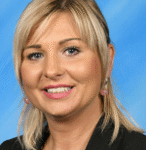
If you want to share any worries or concerns with us, please ask a trusted adult here at school to come and find one of us. They will let us know that you want to speak to one of us.
Safeguarding email for half term holidays and the summer holidays: safeguarding@epa.clf.uk
Evergreen takes the safety of the pupils, teachers and parents very seriously. It is everybody’s responsibility to act if they feel that a child is not being cared for properly or is being put at risk. If you suspect that a child is at risk or being harmed please contact either Miss Vincent, the Designated Safeguarding Lead or Miss Dorse our Deputy Designated Safeguarding Lead.
To ensure that our children are kept safe in school we complete full DBS checks on all adults working/volunteering in school and regularly review our safeguarding procedures.
If you would like more information about keeping your child safe then please look at the following links:
Useful Links
Children’s Well-being approach
Child Friendly Playground Code of Conduct Guide
Child Friendly Online Safety Guide
Child Friendly School Attendance Guide
For child safeguarding information and help:
For mental health information and help:
For domestic abuse information and help:
If you need to talk to someone in Bristol about your worries for a child, please phone First Response on 0117 903 6444.
Online Safety
Conduct: children may be at risk because of their own behaviour, for example, by sharing too much information
Children need to be aware of the impact that their online activity can have on both themselves and other people, and the digital footprint that they create on the internet. It’s easy to feel anonymous online and it’s important that children are aware of who is able to view, and potentially share, the information that they may have posted. When using the internet, it’s important to keep personal information safe and not share it with strangers. Discuss with your child the importance of reporting inappropriate conversations, messages, images and behaviours and how this can be done.
Content: age-inappropriate or unreliable content can be available to children
Some online content is not suitable for children and may be hurtful or harmful. This is true for content accessed and viewed via social networks, online games, blogs and websites. It’s important for children to consider the reliability of online material and be aware that it might not be true or written with a bias. Children may need your help as they begin to assess content in this way. There can be legal consequences for using or downloading copyrighted content, without seeking the author’s permission.
Contact: children can be contacted by bullies or people who groom or seek to abuse them
It is important for children to realise that new friends made online may not be who they say they are and that once a friend is added to an online account, you may be sharing your personal information with them. Regularly reviewing friends lists and removing unwanted contacts is a useful step. Privacy settings online may also allow you to customise the information that each friend is able to access. If you have concerns that your child is, or has been, the subject of inappropriate sexual contact or approach by another person, it’s vital that you report it to the police via the Child Exploitation and Online Protection Centre (www.ceop.police.uk). If your child is the victim of cyberbullying, this can also be reported online and offline. Reinforce with your child the importance of telling a trusted adult straight away if someone is bullying them or making them feel uncomfortable, or if one of their friends is being bullied online.
Commercialism: young people can be unaware of hidden costs and advertising in apps, games and websites
Young people’s privacy and enjoyment online can sometimes be affected by advertising and marketing schemes, which can also mean inadvertently spending money online, for example within applications. Encourage your children to keep their personal information private, learn how to block both pop ups and spam emails, turn off in-app purchasing on devices where possible, and use a family email address when filling in online forms.
Please click on the links below for more information.
Supporting Young People Online (Multiple Languages)
Children’s Internet Safety Quiz
Young Carers
At Evergreen, we are aware that some of our pupils are Young Carers. A Young Carer is a child under 18 who is caring unpaid for a family member or friend who is ill, frail, disabled or has mental health or addiction problems. Young Carers are a vulnerable and sometimes disadvantaged group who frequently experience difficulties in their education as a result of their caring role.
Our school community is committed to meeting the needs of Young Carers so that they can attend, enjoy learning and achieve their full potential. We support our Young Carers in the following ways:
- Our Mental Health First Aider is available daily if children need someone to talk to.
- Raising awareness of staff so they can support Young Carers effectively.
We have designated Young Carers’ School Leads with responsibility for Young Carers and their families. Both pupils and families have been made aware of the identity of these leads and how to contact them to access support.
Pupils can be supported by: Toni Dorse
Our school only shares information with professionals and agencies on a need to know basis in order to support pupils and their families. We actively seek feedback and ideas from young carers and their families to shape and improve support.
Prevent Duty
Prevent is part of the United Kingdom’s counter terrorism strategy. It aims to prevent people from becoming involved in terrorism or supporting terrorism.
Evergreen Primary Academy is committed to supporting the Prevent Strategy in order to protect everyone from radicalisation.
At Evergreen Primary Academy we promote British Values (The Rule of Law, Democracy, Individual Liberty and Mutual Respect and Tolerance of the Beliefs of Others) and enable our pupils to challenge any extremist views.
If you have a concern about someone who is at risk of radicalisation, please contact the safeguarding team.
Information on Prevent:
Operation Encompass – Supporting Our Children
At Evergreen, your child’s safety and wellbeing are our top priority. We work closely with Operation Encompass, a national initiative that helps schools support children who may have been affected by domestic incidents.
If the police attend an incident where a child has been present, they will let us know before the start of the next school day. This means we can provide the right care and understanding as soon as your child arrives at school.
Our aim is simple: to make sure every child feels safe, valued, and supported. All information shared with us is treated with the utmost confidentiality and sensitivity.
If you’d like to know more, please visit www.operationencompass.org or speak to a member of our team.
Evergreen also has a safeguarding email which is monitored by our safeguarding team. If you would like to contact us, please email: safeguarding@epa.clf.uk and someone will get back to you.
FGM
As part of our duty to protect girls from FGM, we always speak to all parents before they take trips abroad. If you are worried about any aspect of FGM, please contact the safeguarding team.
FGM Helpline: 0800 028 3550
NSPCC – FGM Information and Help
Safeguarding Newsletter
2026-2027
Safeguarding Newsletter – September 26-27
2025-2026
Safeguarding Newsletter – December 25-26